
The process of extinction is naturally occurring. However, the rate at which it occurs decides the serious implications on the environment and in turn the planet.
In today's times, while some precious plants have been endangered, a few others are on the verge of extinction. The major reasons behind the downfall of the plant species are clearing off large stretches of land due to construction activities, predators, or activities such as hunting.
Here's a look at the list of endangered plants.
Endangered Plants
There are many medicinal and other rare species of plants that are going to become extinct in the near future. If proper measures are taken to conserve these endangered species, it is possible to save at least a few of them.
Dragon Tree
Arizona Hedgehog Cactus
Baobab Tree
Frazer Fir
Green Pitcher Plant
Harts Tongue Fern
Monkey Puzzle Tree
Pink Lady's Slipper
Poison Sumac Tree
Dragon Tree
The dragon tree or Dracaena genus contains 40 species of plants in this group. Most of the species are found in Africa, while a few of them have South-Asian origin. The Dragon tree, which belongs to the Dracaena draco species, produces red-colored bright resin. The resin is known as 'dragon's blood' and was used as a medicine in ancient times.
Baobab Tree
The baobab tree is mostly found in Africa and is useful for various purposes. The huge and swollen trunk is the characteristic of baobabs. Average height of the plant ranges from 18-25 meters, while the width is 10 meters. The droughts that have occurred in recent years have posed a danger to the regeneration of these trees. Earlier, elephants played an important role in the dispersal of baobab seeds. However, with the destruction in habitats of elephants, the rate of dispersal has reduced drastically. Moreover, the demand for fruits of baobabs in urban areas is on the rise. The seeds, after the consumption of the fruit, end up in a garbage dump, and are not used for plantation; thus, the number of such trees has reduced a lot.
Hart's-tongue Fern
It is one of the fern species of the genus, Asplenium and has a botanical name, Asplenium scolopendrium. It is commonly found in Europe and North America. Quarrying, lumbering, and trampling have resulted in the destruction of its habitat. The leaf-width of this fern ranges between 3-6 cm, while the length could be anything from 10-60 cm.
Fraser Fir
The Fraser Fir which has the botanical name, Abies fraseri is native to the Southern Appalachian mountain range. This evergreen coniferous plant can grow up to the height of 20 meters. Introduction of an exotic pest from Eurasia has led to the destruction of this plant species. Excessive acid precipitation is also one of the causes behind the decline in the number of Fraser Fir.
Monkey Puzzle Tree
It is the national tree of Chile and is known for its grotesque and striking appearance. The botanical name of Monkey Puzzle tree is Araucaria araucana. This dioecious plant possesses triangular leaves having 3-4 cm width. The Monkey Puzzle tree lives for many years and is thus, named as the living fossil. Illegal logging is the main reason behind reduction in the number of such trees. Increase in distance between neighboring plants due to logging prevents natural pollination; it is also a reason behind the tree becoming endangered.
Koai'a
The koai'a is the common name ofAcacia koaia which is native to Hawaii. It doesn't grow beyond 5 meters in height. The seeds of this plant are arranged in pods. The koai'a is adapted to dry areas and even forms forests with less amount of water consumption.
Green Pitcher Plant
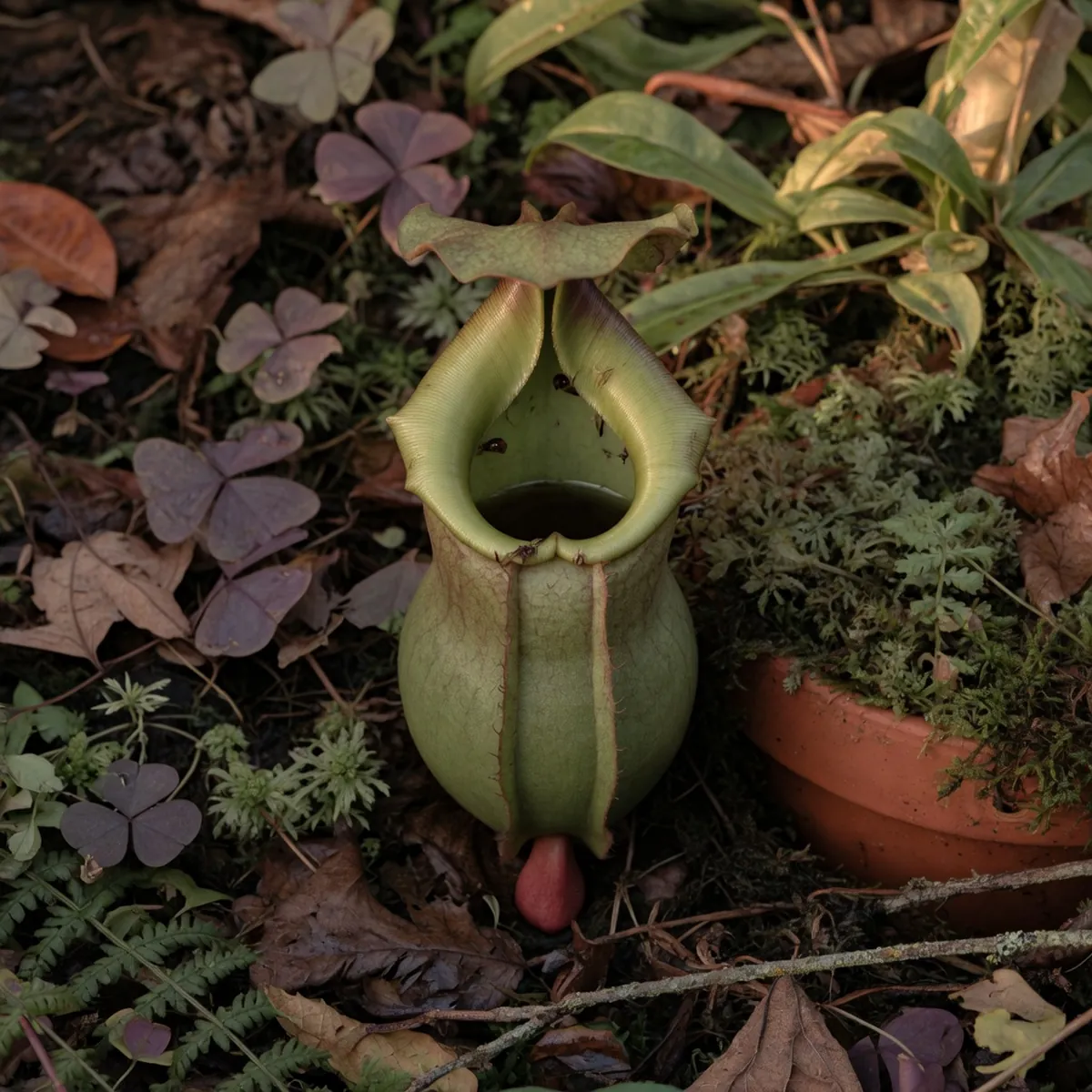
It is a carnivorous plant which feeds on insects. This plant is native to Georgia and South Carolina. It is also found in other parts of southern USA. The deep cavity possessed by these plants contains a liquid (pitfall trap) for capturing insects.
Other Endangered Plants
The list of endangered plants given below, includes as many plant species as possible. The botanical names of few plant species are included while the common names of others are given below.
Triunia robusta
Calamus aruensis
Cooktown orchid
Marsupella profunda
Sphaeropteris crinita
Ochyraea tatrensis
Spruceanthus theobromae
Graptophyllum reticulatum
Tectaria devexa
Triunia robusta
Diploglottis campbellii
Acronychia littorali
Euphorbia bupleurifolia
Arizona Hedgehog Cactus
Queen Victoria Agave
Hibiscus insularis
Orbea paradoxa
Georgia Aster
Darwinia chapmaniana
False Poison Sumac
Lanaihale cyrtandra
Lanai Sandalwood
Alabama Pitcherplant
Ione Buckwheat
Mexican Flannelbush
Olokele Gulch Bluegrass
Gibson's Cyanea
Jamaican Broom
Pink Lady's Slipper
Astragalus phoenix
Castilleja salsuginosa
Cryptantha insolita
Centaurium namophilum
Eriogonum viscidulum
Eriogonum ovalifolium
Spiranthes diluvialis
Rorippa subumbellata
Polyctenium williamsiae
Phacelia inconspicua
Phacelia inconspicua
Phacelia inconspicua
Phacelia inconspicua
Listera convallarioides
Listera auriculata
Listera chordata
Allium canadense
Aureolaria pedicularia
Ranunculus fascucularis
Dryopteris goldiana
Arabis canadensis
Astrophytum asterias (Star Cactus)
So in a nutshell, one of the ill effects of industrialization is the extinction of several plant species of our planet. The names of the jeopardized plants given above, includes species that are from all over the world. In the end, what we must conclude from this fact is no plant or animal species is fully resistant to extinction.