
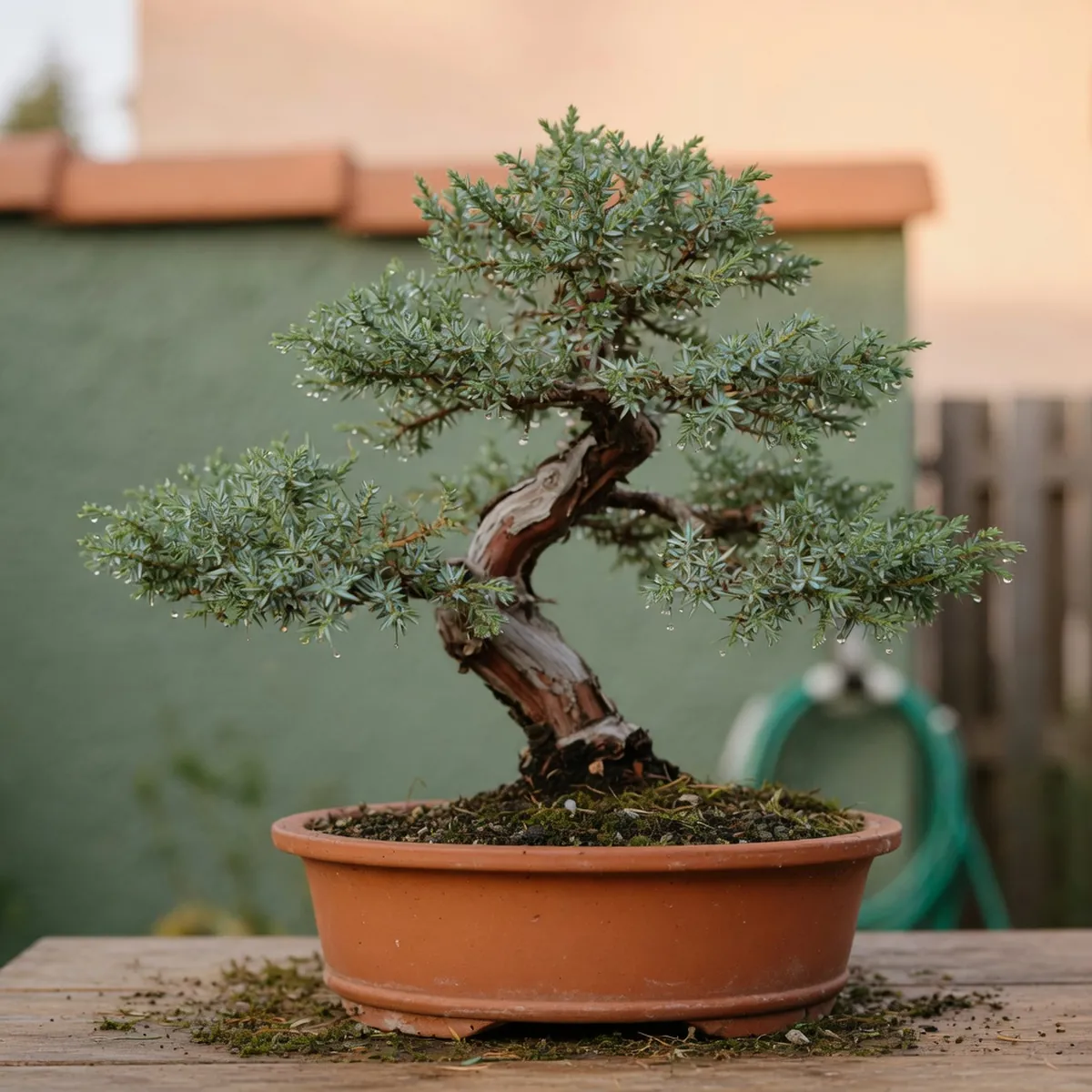
Bonsai trees can be classified into formal upright, informal upright, slant, raft, group, literati, cascade, and semi-cascade. If you have never grown or cared for a bonsai earlier, a juniper bonsai would be the perfect choice for you. It comes under the category of informal upright, and is a conifer belonging to the genus Juniperus and family Cupressaceae. Its compact foliage and needle-like leaves look very attractive. There are several varieties of juniper that are ideal for the bonsai culture. Chinese junipers, Japanese garden junipers, green mound, needle, shimpaku, juniperus rigida, juniperus squamata, juniperus sabina, and juniperus sargentii are some of the popular varieties. These can be grown indoors as well as outdoors.
Caring for a Juniper Bonsai
Quality of Soil and Container
Select a juniper tree which is 3-7 years old. Once you have selected the variety, choose a container that has enough space for the root system. The container must also have drainage holes so that the excess water is drained off. This plant grows well in sandy loams. You should also replenish the soil with fertilizers.
Location
Junipers need at least 4 hours of sunshine everyday. So, make sure that you place your plant at a place where it gets ample sunlight. Bring it outdoors in the morning, so that it gets the low intensity sunlight which is required for its growth. You could also keep it in a greenhouse.
Watering
Excess watering can damage the roots of the juniper. Therefore, you must not go on a watering spree. Before watering you must touch the soil to check if it has dried or not. You must also make sure that the water does not contain any chlorine. Standing water can cause serious damage to the tree and lead to root rot. You could also mist it at regular intervals.
Fertilizer
The soil which contains potassium, phosphorus, and nitrates will certainly help the juniper grow well. During the growing season, it is advisable to fertilize every 15 days. Make sure that you mix the fertilizer properly, as direct contact between the roots and fertilizer can cause damage to the roots. Fertilizing is an important aspect that can help ensure full blossoms and healthy foliage on your bonsai.
Pruning
It is the process of pruning through which the tree's size is kept small. You must prune the branches and stems every summer and spring. You need to get rid of the crossed branches and dead limbs. You also need to prune the roots during the spring season, and prune them every two years, at the time of re-potting. Nipping is also important. When new growth appears on your juniper, nip it with your fingers by twisting it, but never prune all new growth simultaneously. The wiring method can be followed to give a proper shape to it. Gently tie wires, beginning from the base of the tree. Then, work your way up to the branches. The wires should not be very tight and you can also adjust and bend the branches so that they grow in the desired direction. You could leave the wires for a few months and remove them using a wire cutter.
Follow the aforementioned instructions religiously to ensure that your miniature juniper grows well and gets adorned with beautiful foliage that you have always wanted.