
Japanese blood grass is aptly named so to describe its characteristic of turning blood-red in color during fall. Also known as red baron grass or cogon grass, it is a species of ornamental grass. However, it is not a native of Japan.
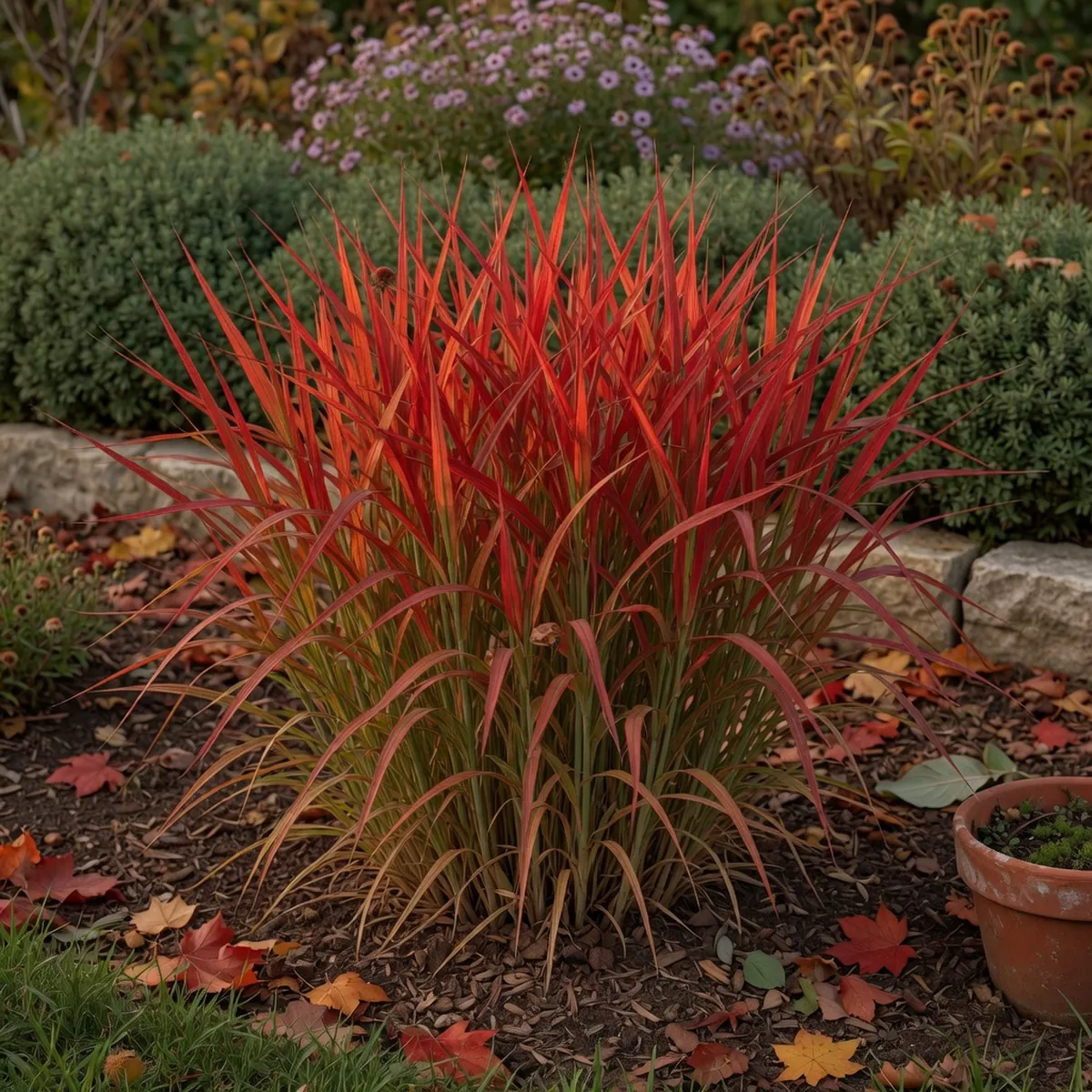
As per plant origin data, this tall grass is indigenous to some parts of Asia, Africa, and Australia.
Though the name sounds peculiar to novice gardeners, it is a popular perennial grass planted in flower gardens and areas that require soil stabilization. Its scientific name is Imperata cylindrica. At maturity, its height reaches to about 10 feet; the dwarf species grow to a maximum height of about 2 feet.
The leaves are about 2 cm in width and taper towards the tip. Compared to the remaining leaf portion, the main vein that runs along the foliage length is lighter in color. This grass has a deep root system and measures about 0.4-1.2 m.
Japanese blood grass is best grown in flower bed borders, container gardening, and rock gardening. Apart from being used for embellishing the gardens, this grass has numerous other uses.
It is harvested on a large-scale for its usage in roof thatching, bag making, mat weaving, and paper making. As the plant parts possess pharmaceutically important active ingredients, it is commonly used as an effective tonic, astringent, and diuretic medicine. The tender leaves, flowers, and roots are also eaten raw or in the cooked form.
Once grown, Japanese blood grass spreads rapidly irrespective of the prevailing soil conditions. In other words, growing and caring for this grass is very simple. Except for the first few days after planting, it hardly requires any additional maintenance.
Growing Conditions
It is best adapted in the USDA hardiness zones 6-9. You will get to enjoy the vibrant red foliage when grown in areas with full sunlight or in partly-shaded areas as well. The soil should be moist and well-drained.
Modes of Propagation
It is propagated by sowing seeds or dividing the rhizomes of mature plants. According to your convenience, you can either purchase the seeds or healthy grass clumps from your nearby nursery center.
Preparation
For quick establishment, choose grass clumps. Dig a planting hole 2-3 times larger than original root ball size. The depth should be roughly equal to the length of the root ball. Gently remove original container, spread the roots, and place the grass in the hole.
Plantation
Add enough water to the planting hole and wait till the surrounding soil absorbs it. Backfill the soil in the hole, ensuring that you do not disturb the roots. Press the soil lightly and water the grass sufficiently. Consider mulching to save moisture.
After the last frost is over, you can remove the brown and discolored foliage from the plant. Being a hardy plant, there is no specific care for this grass as such. Also, the invasive property of this grass has made it a suitable species for soil conservation.
It is grown as a ground cover in areas that are prone to soil erosion. As expected, it spreads profusely, converting the area into a monoculture farm within a short time.