
The bird of paradise plant is a tropical flowering variety, belonging to the family Strelitziaceae of the order Zingiberales.
Represented scientifically as Strelitzia reginae and known commonly as wild banana or crane flower, it is native to warm and humid conditions of South Africa. The flower of this exotic plant resembles a bird's beak, hence the name.
Identification
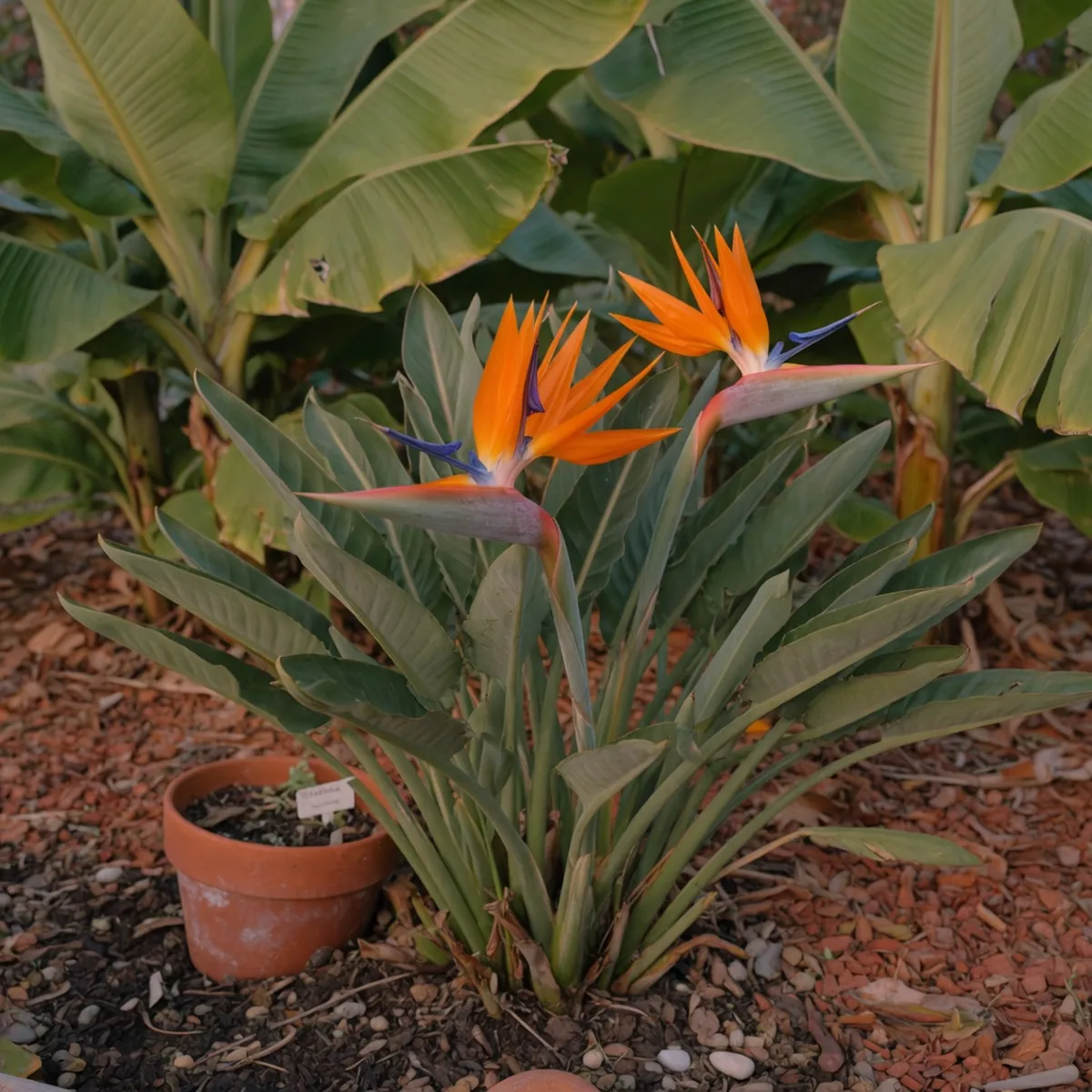
Categorized under evergreen shrubs and bushes, the foliage of this shrub is similar to banana leaves, except that the former type is smaller in size (about 6-8 inches wide and 20 inches long).
At maturity, the height of this bush is approximately 4-5 feet. The blooms have orange and blue-colored petals. Its flower has an incomparable beauty and color.
Growing
These plants add to the aesthetic value of any landscape design. Growing them is also easy, thus making it a preferred choice for both novice and experienced gardeners. Since it is native to the tropical climatic regions, optimal sunlight is crucial for better growth and timely flowering.
Choosing the Site
For growing it, the biggest challenge is finding the right plantation site. If you are lucky to have a garden that receives abundant sunlight and soil that is not waterlogged, then you can grow it successfully.
Soil Preparation
The next step is proper soil preparation. In case of heavy garden soil, mix some amount of sand to promote better drainage. You can prepare planting holes with two feet space between them. Do not forget to add organic fertilizers.
Selection
There are several species of this shrub. The logic is to choose a specific variety that suits the soil type and climatic conditions in your area. Also, ensure that you opt for the disease and pest-resistant varieties for your flower garden.
Sunlight
For better growth, they should be exposed to maximum sunlight. The optimum temperature condition is between 50-60 degrees Fahrenheit. Water them regularly and keep the soil moist (not wet), particularly during the period of spring to summer.
Caring
Supplementing the soil with water-soluble fertilizers is necessary for maintaining the health of these shrubs. Since they cannot tolerate heavy frosting, make sure you protect them with plastic covering. If planted in containers, you can shift them indoors until the frosting is over.
Possible Problems
A frequently reported problem regarding bird of paradise is its invasive nature. Hence, never grow it near the foundation of your house. As it propagates by means of suckers, it's better to prune it regularly and keep the sucker production under control.
Once the bird of paradise blooms in your garden, you can use the flowers to liven up the room. Select a long stem which is about to bloom and use as a cut flower. Make sure you retain a leaf while cutting the flowering stem.
Place this in a narrow vase filled with colored stones and water. You can enjoy the beauty of these cut flowers for three weeks.