
Piñon, which is the seed of the Monkey Puzzle tree, has been the staple food of Pehuenche Indians, an indigenous group of Argentina and Southern Chile. The term 'Pehuenche' is derived from 'pehuen', which means Araucaria, and che, which means people.
The Monkey Puzzle tree belongs to the cone-bearing Araucaria genus and Araucariaceae family. Its scientific name is Araucaria araucana. It is the national tree of Chile. It is somewhat strange to look at, which is perhaps the reason behind its bizarre name. The first Monkey Puzzle tree was brought to Europe in the 1790s by an English naval surgeon and botanist named Archibald Menzies. Menzies first came across the seeds of this tree while attending a state dinner in Chile. He kept a few seeds, which germinated while he was returning to England. These seeds were then planted at the Royal Botanic Gardens at Kew.
Considering the fact that monkeys are not found in its native habitat, people often wonder how this tree got its name. Well, it's believed that when the owner of a young tree specimen at Pencarrow garden in Cornwall was showing the tree to his friends, one of his friends made a remark that it would puzzle a monkey to climb the tree. Initially called Monkey puzzler, it soon got its current name. Araucaria heterophylla (Norfolk pine), Araucaria bidwillii (Bunya Bunya), and the recently discovered Wollemi Pine are some of the trees that are related to this evergreen conifer. This tree was classified as endangered by the International Union for Conservation of Nature (IUCN) in 2013. Excessive harvesting and damage due to wildfires caused the Chilean government to declare this tree a national monument in 1990.
Monkey Puzzle Tree Information
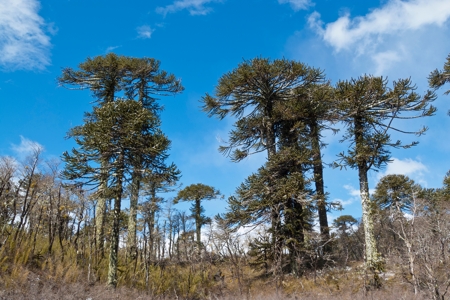
Araucaria Araucana is endemic to the lower slopes of the Chilean and Argentinian south-central Andes. It can be grown in large gardens and parks for the unusual effect provided by its foliage and branches. Here's some information about this tree.
◆ Genus: Araucaria
◆ Order: Pinales
◆ Class: Pinopsida
◆ Scientific name: Araucaria araucana
◆ Also called: Monkey Puzzle tree, Chilean pine, Pehuén
◆ Plant Type: Evergreen, Coniferous
◆ Bark Color and Type: Grayish-brown, Ridged
◆ Fruit Shape: Cone, Oval
◆ Fruit Color: Tan or brown
◆ Fruit Covering: Hard
◆ Fruit Size: 4-6 inches long, 3-6 inches wide
◆ Height: 60-100 feet (in its native habitat), 20-30 feet tall when cultivated
◆ Spread: 30-35 feet (in its native habitat)
◆ Growth Habit: Upright and pyramid-shaped
◆ Growth Rate: Moderate
◆ USDA hardiness zone: 7b through 11
◆ Soil: Well-drained, evenly moist soil
◆ Soil pH: Acidic
◆ Light Requirements: Full sun to part shade
◆ Watering Requirement: Average
◆ Foliage: Dark green
◆ Tree Shape: Tall, Pyramidal
◆ Pruning: Only for removing dead leaves or branches
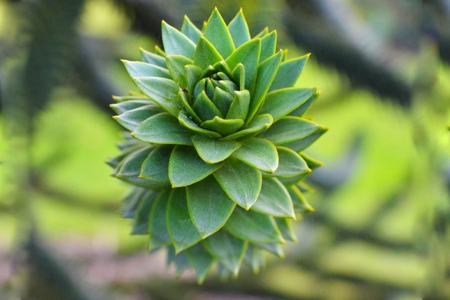
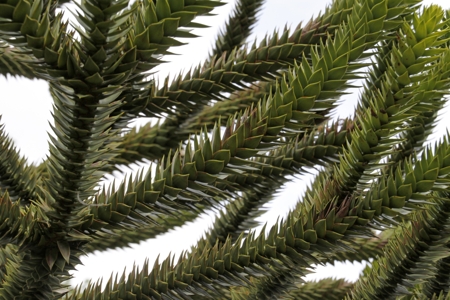
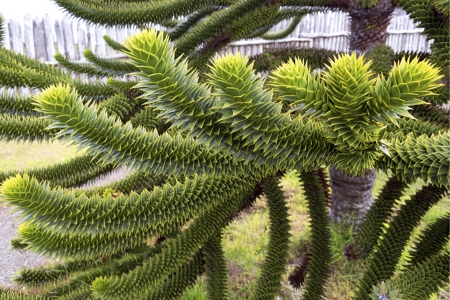
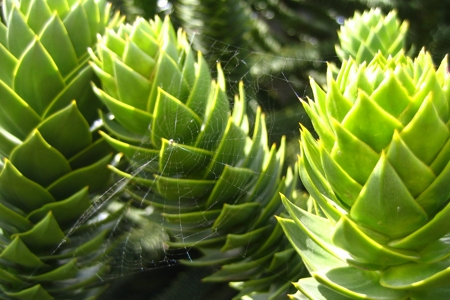
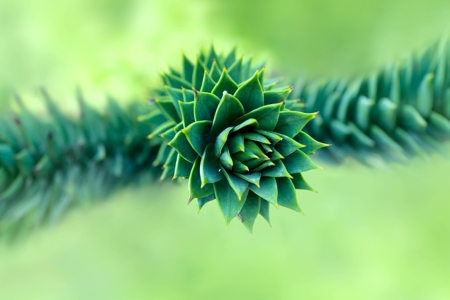
Here's some information about its strange-looking leaves, along with a few pictures:
◆ Leaf Type: Needleleaf
◆ Leaf Shape: Ovate, lanceolate
◆ Leaf Arrangement: Spiral
◆ Leaf Venation: Parallel
◆ Leaf Type: Simple, Evergreen
◆ Leaf Blade Length: Less than 2 inches
How to Grow a Monkey Puzzle Tree
It must be noted that if the climate is conducive, it will thrive outdoors. If you are planning to grow it in your garden, here are some instructions on growing and caring for the Monkey Puzzle tree.
Light and Temperature Requirements
This tree is more likely to thrive well in full sun, with more than six hours of direct sunlight in a day. In its native habitat, it can survive in partial shade as well. It is hardy to USDA zones 7b to 11, which means that it has the ability to withstand minimum temperatures of 5°F to 50°F. It grows best in regions where it is cool and humid during summer. It must be noted that this tree will not do well in regions that are very hot. Also, protect the plant from frost.
Soil Preference and Watering
It will thrive in well-drained soils. Light (sandy), medium (loamy), and heavy (clay) soils can be used, as long as they drain well. In case of clay, sand can be mixed, if the soil tends to stay waterlogged or damp for long periods. It can be planted in soil that is acidic. The pH can be within 4.6 to 6. During the first year, water the tree deeply once a week.
Adding a layer of organic mulch will also help in retaining the moisture. Once it gets well established, provide supplemental irrigation once every two weeks. Water it properly, but refrain from excessive watering, as that can cause the soil to become damp. Allow the soil to become dry before you water the plant. The frequency of watering can be reduced during winter.
Fertilizer
Monkey Puzzle trees need fertile soil. If the soil is not fertile, you could amend the soil once every month from spring through autumn. An all-purpose, water-soluble fertilizer can be applied. You can mix ½ teaspoon of an all-purpose fertilizer in a gallon of water. Also, refrain from excessive application of fertilizer as that could also damage the roots.
Propagation
You can grow this plant from seeds. For better results, it's advisable to use fresh seeds. First of all, soak the seeds in lukewarm water for about 24 hours. Thereafter, fill a seed-starting tray with the potting mix. Place the seeds with the pointed tip facing down. Place them 2 inches apart, and about ¾ inch deep. Ensure that the top of the seeds remains exposed. Water it so that the soil becomes damp. Usually, the process of germination starts within a couple of months. Later, the seedlings can be placed in small containers. Once the plant grows large enough, it can be transplanted. Make sure that the roots don't get damaged during transplanting.
Interesting Facts About the Monkey Puzzle Tree
◆ Considered to be one of primitive conifers by botanists, fossils of this Araucaria species date back to 60 million years.
◆ It is believed that these trees can live as long as 1,000 years. The oldest known tree is about 800 years old.
◆ It can take about 40 years for cones to form.
◆ Majority of the trees are dioecious, which means that the male and female reproductive parts are on separate trees.
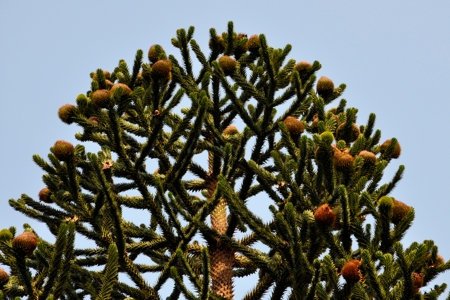
◆ Male and female trees can be identified by looking at the cones. Female cones are round, with the scales being yellowish-green in color. Over time, the cone become more spherical, and the color changes to brown as they ripen. The scales fall off eventually. Male cones are elongated, resembling the shape of a cucumber.
◆ In comparison to most coniferous trees that are found in the Northern Hemisphere, this tree is found in Southern Hemisphere (Chile and Argentina).
◆ These plants are moderately tolerant to drought. Though they can tolerate maritime exposure, they are intolerant of air pollution and hot, dry soils.
◆ Some of the cones can weigh as much as 10 pounds, which is why one must not stand under this tree when its cones are being shed.
◆ A picture of this tree also appears in the official seal of the Neuquén Province of Argentina.
On a concluding note, this tree does best in well-drained soil and full sun. So, make sure that you plant it in an appropriate place. If you have grown it in a pot, consider repotting when the plant starts outgrowing the pot.